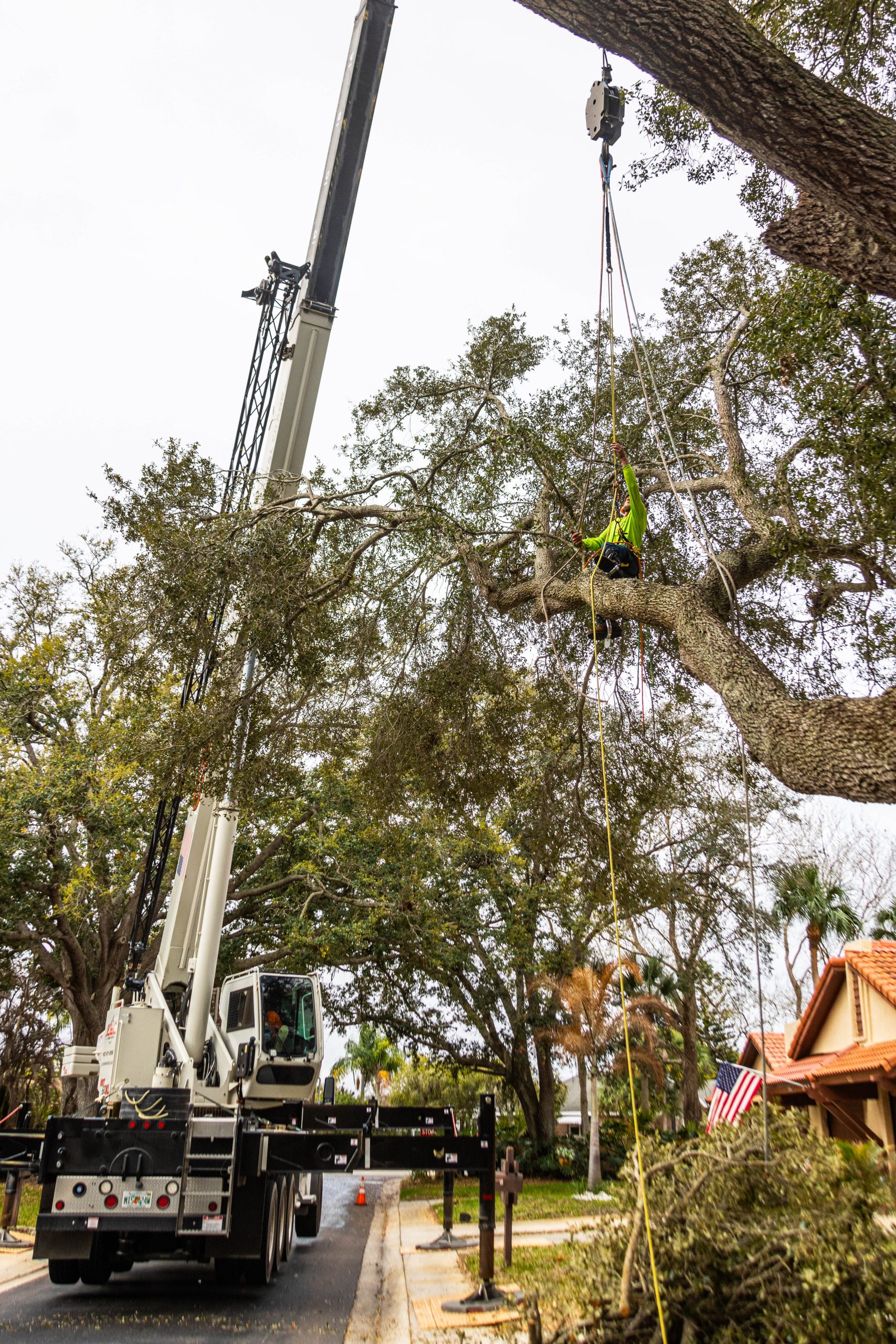
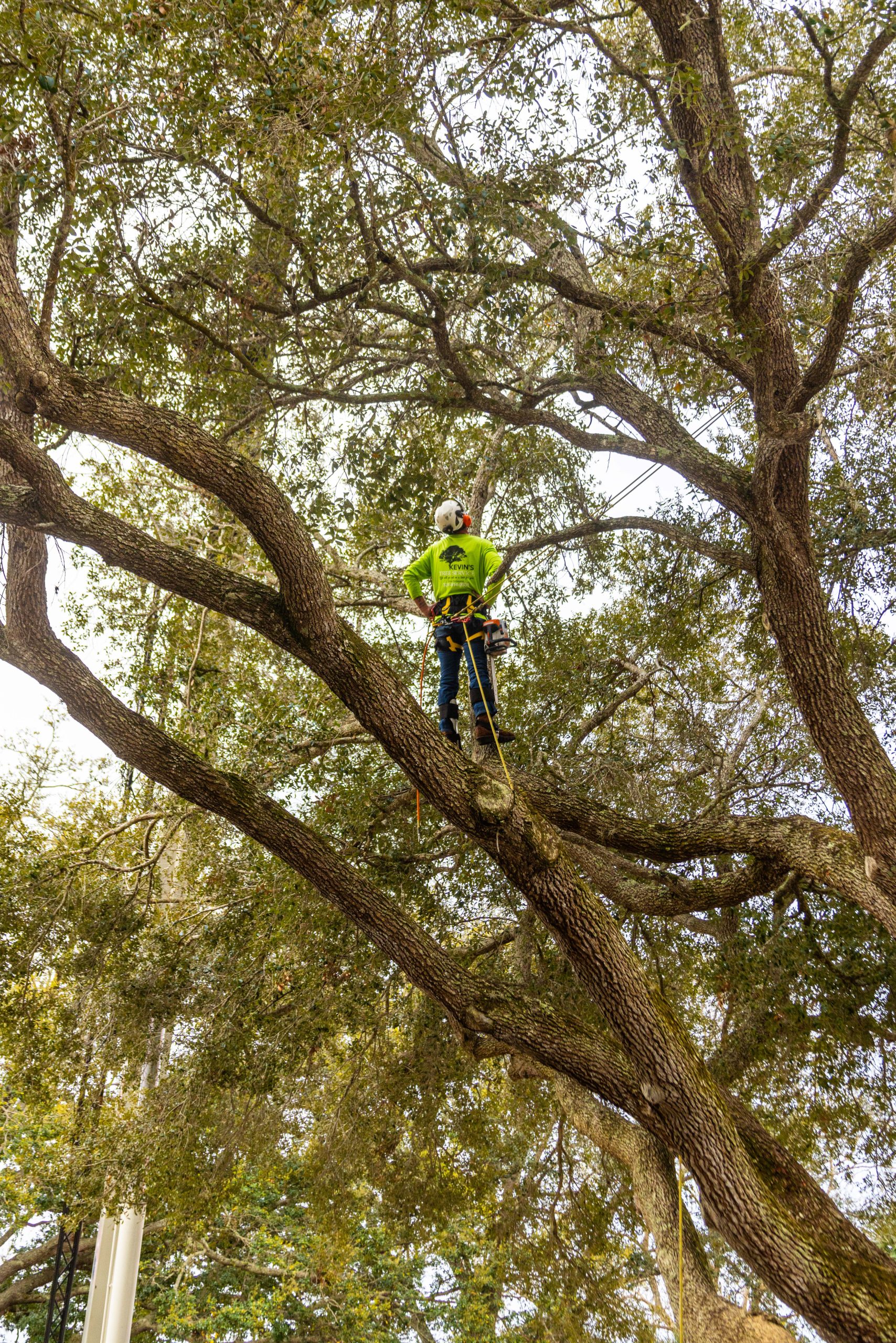
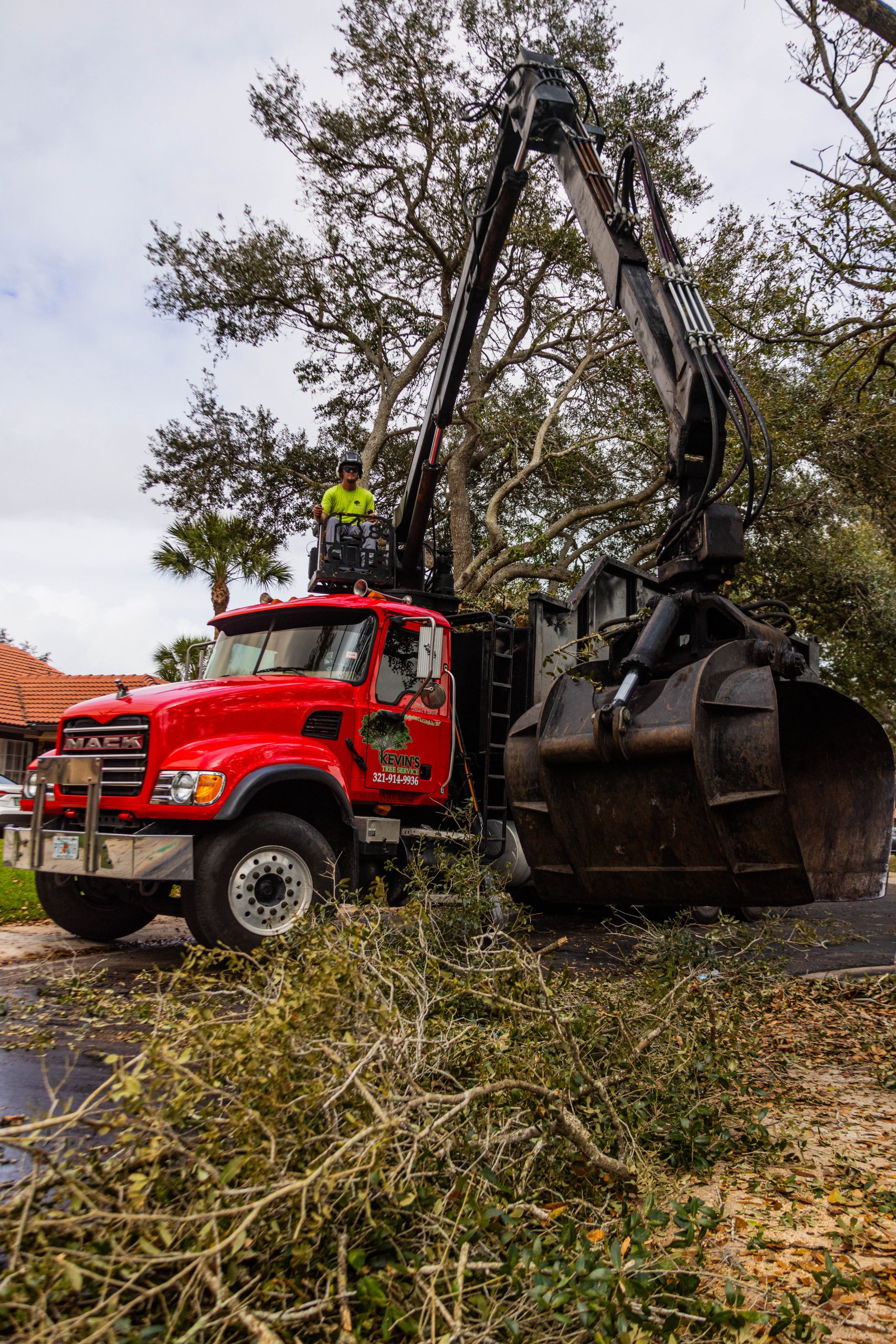
Short answer: In the City of Palm Bay, yes — a tree removal permit is required to remove most trees 6 inches or larger in diameter, and most mature palms. But a 2019 Florida law gives single-family homeowners a way around the permit when a certified arborist documents the tree as a risk. The rules differ in Melbourne, West Melbourne, Malabar, and unincorporated Brevard County, so the first question is always: which jurisdiction is your lot in?
Kevin’s Tree Service handles permits on every job that needs one. This guide explains what the rules are so you know what to expect.
Palm Bay Tree Removal Permit Rules
Palm Bay’s Municipal Tree Code (City Code Chapter 175, §175.014) requires a tree removal permit for:
- Any tree with a diameter at breast height (DBH) of 6 inches or greater. DBH is measured 4.5 feet off the ground.
- Any palm with 4.5 feet or more of clear wood (trunk from the ground to the base of the first fronds).
- Land clearing on residential lots under one acre (see lot clearing).
To apply, the city asks for a fee, a copy of the recorded deed, a hold-harmless agreement, and a site sketch showing the species and DBH of every tree on the lot. The city processes applications within seven days under §175.014(C).
What happens if you skip it: removing a regulated tree without a permit can trigger a stop-work order and a one-week deadline to apply at double the standard fee, and the city can require a restoration plan or mitigation payment under §175.014(D).
Palm Bay exemptions
- Trees posing an immediate threat — the City Manager or designee can clear these verbally on site.
- Prohibited/invasive species (Brazilian pepper, Australian pine, melaleuca, etc.) with approval under §175.027(C).
- Agricultural land, commercial nurseries, and some permitted construction sites.
- Developed single-family and two-family lots that qualify under Florida Statute 163.045 (below).
Confirm current fees and forms with Palm Bay Growth Management before you apply; the city updates its code and fee schedule periodically.
Florida Statute 163.045: The Homeowner Exemption
Since 2019 (amended in 2022), Florida law prohibits any city or county from requiring a notice, application, permit, fee, or mitigation for pruning, trimming, or removing a tree on residential property when the owner has documentation that the tree poses an unacceptable risk. Local governments also cannot force you to replant.
The fine print matters:
- “Residential property” means a single-family detached home on a lot actively used as a single-family residence. Duplexes, condos, commercial lots, and vacant land do not qualify.
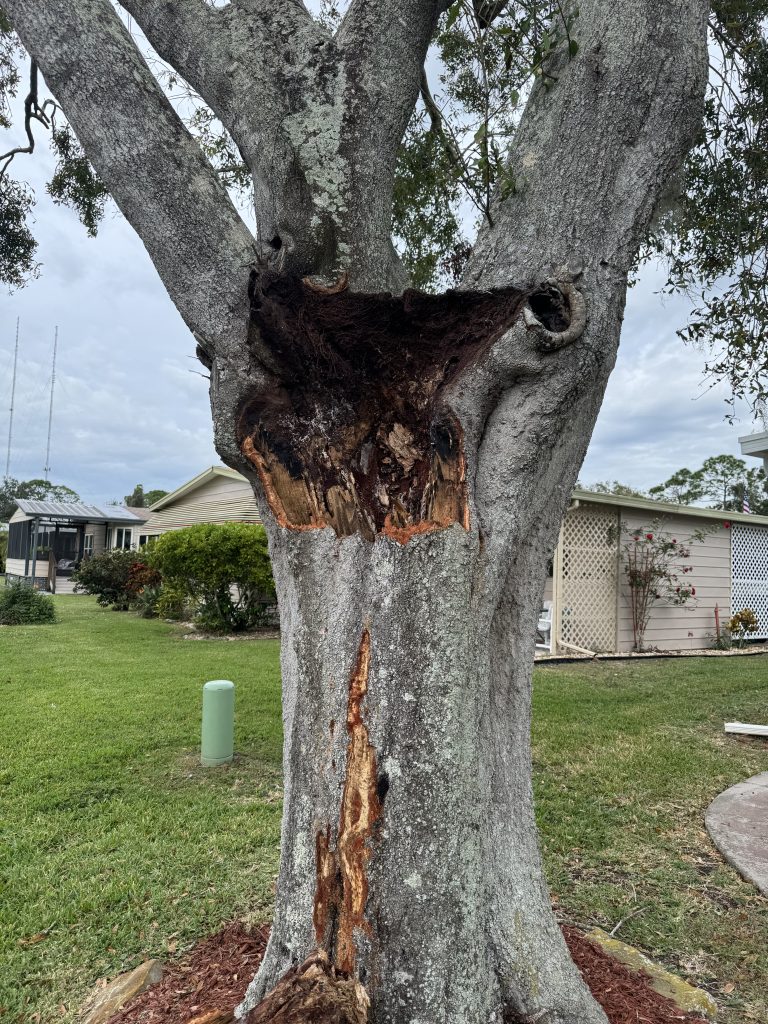
- “Documentation” means an on-site assessment following the ISA Best Management Practices – Tree Risk Assessment (2nd edition), signed by an ISA Certified Arborist or a Florida-licensed landscape architect. A note from a tree trimmer does not count.
- “Unacceptable risk” means removal is the only practical way to bring the tree’s risk below moderate. A healthy tree you simply don’t like doesn’t qualify.
- The statute does not cover mangroves, which have separate state protection.
In practice: if a dead, cracked, leaning, or root-damaged tree threatens your home, an arborist’s risk assessment lets you remove it without waiting on the city. If you want to remove a healthy live oak to put in a pool, you’ll still need a permit.
Other Brevard County Jurisdictions
Every city in Brevard sets its own tree code, and unincorporated areas fall under Brevard County’s land clearing and landscaping regulations. The thresholds, protected species lists, and fees are different in each — Melbourne, West Melbourne, Malabar, Grant-Valkaria, Indialantic, Satellite Beach, Rockledge, and Cocoa all handle it differently, and some protect “specimen” trees above a larger diameter regardless of other rules. Statute 163.045 applies everywhere in Florida, so the arborist-documentation route works in any of them for qualifying single-family lots.
Don’t guess. Tell us the address and we’ll tell you which code applies and whether a permit is needed. We work in every one of these cities weekly.
Trees That Usually Don’t Need a Permit
- Small trees under the local DBH threshold.
- Invasive species on most Brevard prohibited lists (Brazilian pepper, Australian pine, melaleuca, carrotwood, earleaf acacia). Many cities encourage their removal.
- Fruit trees, in many jurisdictions.
- Trees that have already fallen or are an immediate hazard after a storm.
How Kevin’s Tree Service Handles Permits
- We identify the jurisdiction and the tree’s DBH and species during the free estimate.
- If Statute 163.045 applies, we can arrange an ISA Certified Arborist risk assessment through our network so you have the documentation on file.
- If a permit is required, we prepare the sketch and application and submit it before work begins.
- We never remove a regulated tree without the paperwork — it protects you from fines and us from liability.
Planning a removal? See our tree removal cost guide, dead tree removal, and palm tree removal pages. Questions about a specific tree? Call or text 321-914-9936 for a free estimate anywhere in Brevard County.
This article is general information, not legal advice. Codes change; verify current requirements with your city or county before removing a tree.
Sources
- Florida Statute §163.045, Tree pruning, trimming, or removal on residential property
- City of Palm Bay Code of Ordinances, Chapter 175 Municipal Tree Code, §175.014 and §175.027