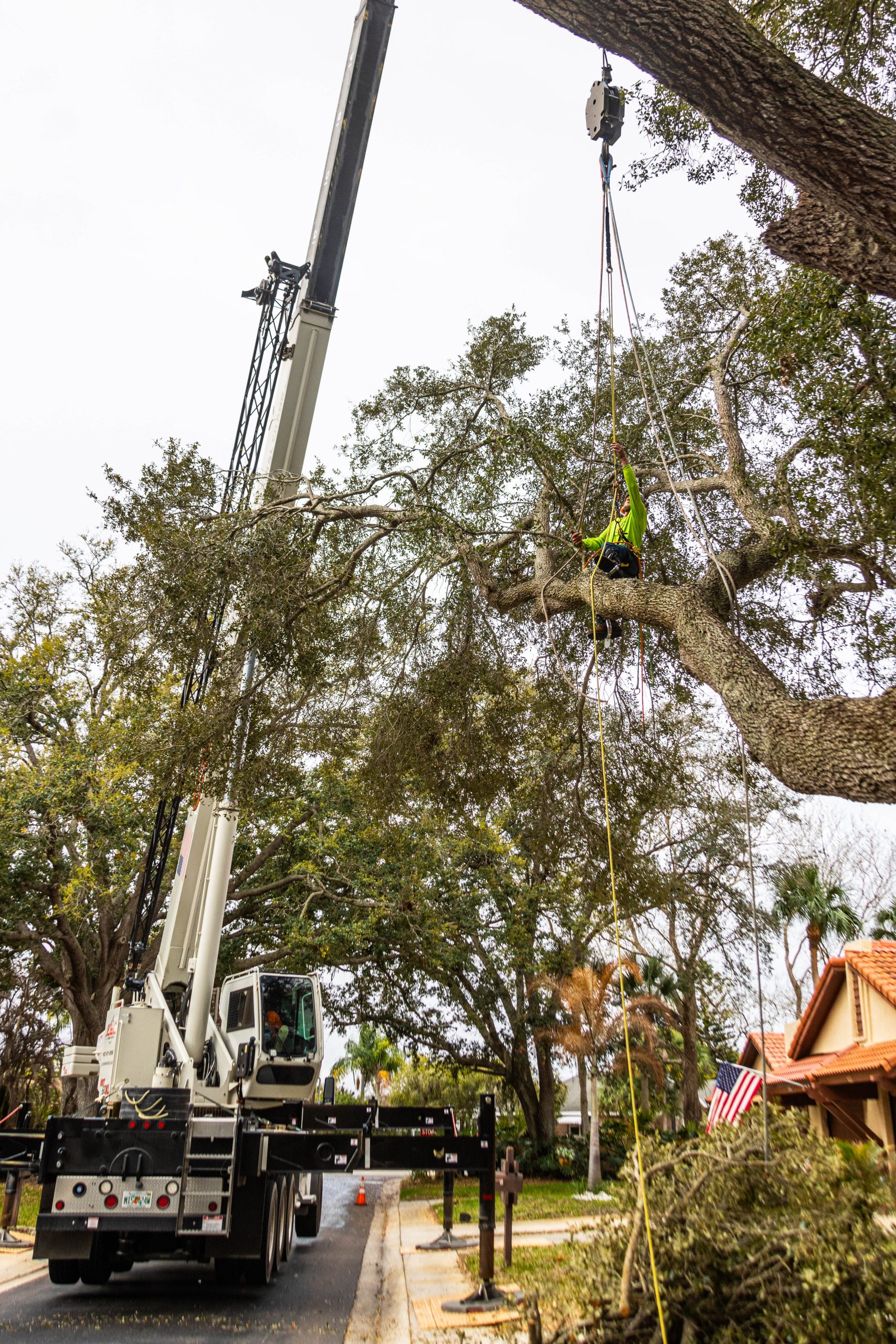
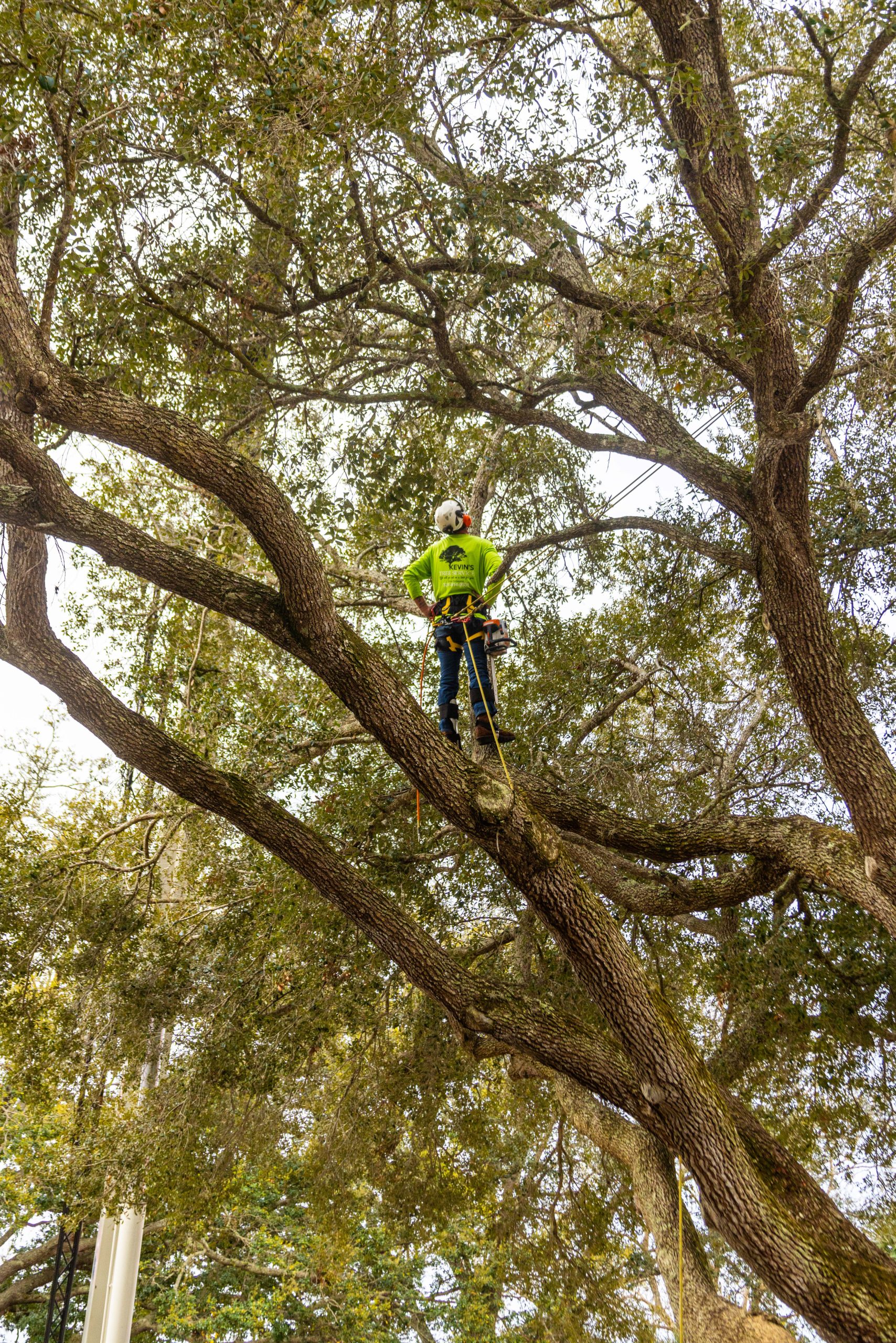
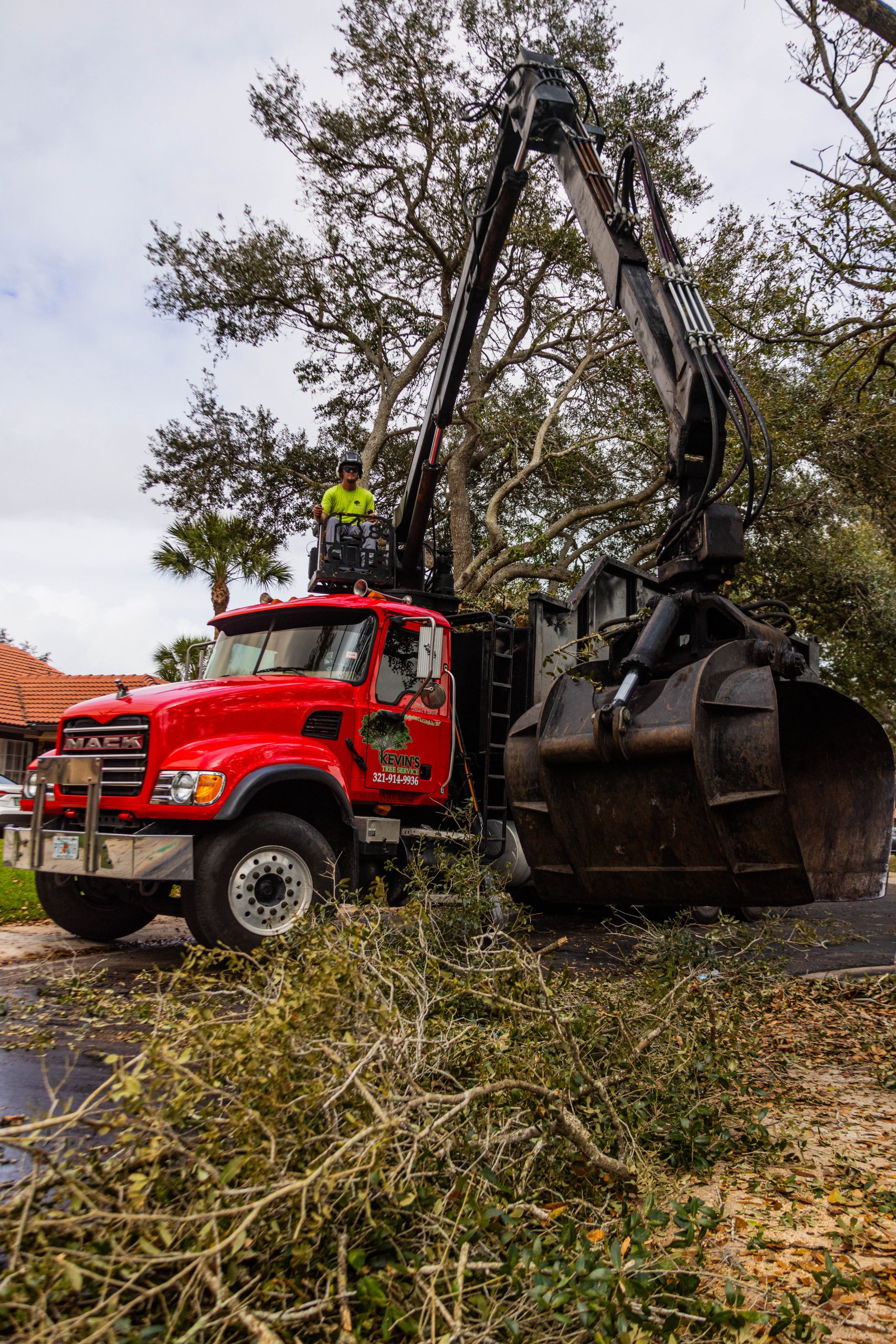
“My neighbor’s tree fell on my property — who pays?” In Florida, the answer depends mostly on the tree’s condition. It’s one of the most common calls we get after a storm in Brevard County: “My neighbor’s oak came down on my fence/roof/car. Do they have to pay?” The honest answer is usually no — unless the tree was dead or they’d been warned it was dangerous. Here’s how Florida law handles trees, branches, roots, and property lines, and what you can actually do about a neighbor’s tree before it falls.
This is general information from a tree company, not legal advice. For a real dispute, talk to a Florida attorney.
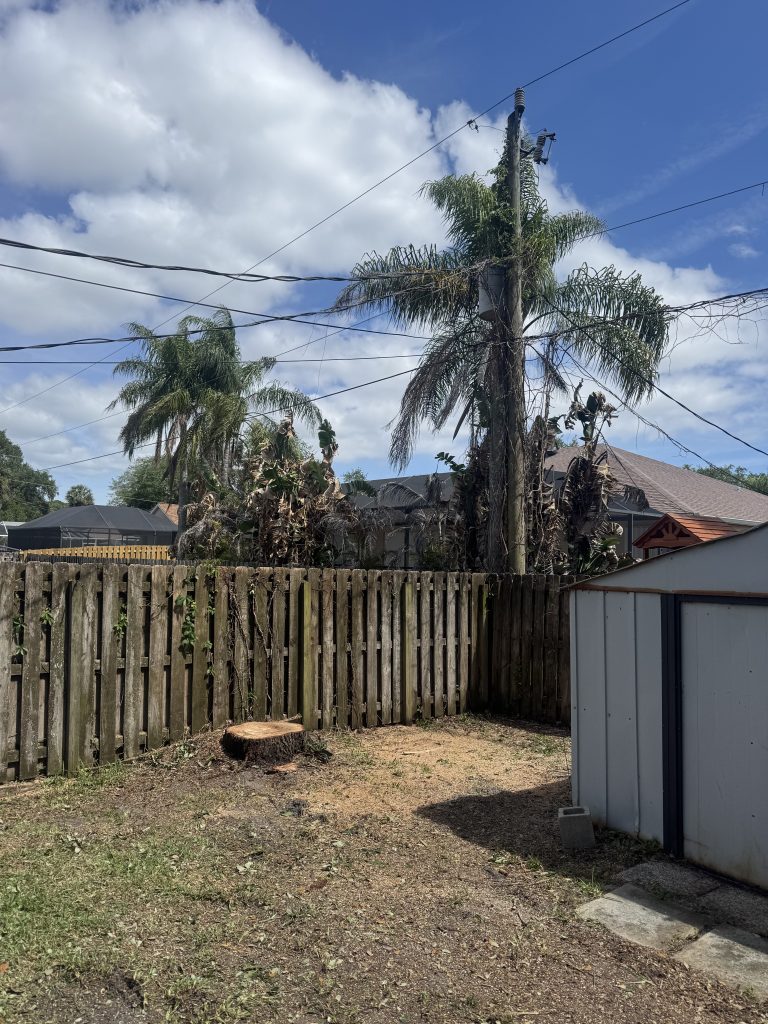
The Basic Florida Rule: Healthy Tree vs. Dead Tree
- Healthy tree falls in a storm: it’s treated as an act of nature. The damage is the responsibility of whoever’s property it landed on, and you file with your own homeowners insurance. The tree’s owner isn’t liable just because it was their tree.
- Dead, diseased, or obviously hazardous tree falls: the owner can be responsible for the damage, because a reasonable owner should have dealt with a known hazard. Florida legal references treat the owner as generally liable for a dead tree and the neighbor as generally bearing the loss from a live one.
Important caveat from University of Florida IFAS’s review of the law: no Florida appellate case has squarely decided the live-vs-dead distinction, so outcomes turn on the facts and on what the owner knew.
Branches and Roots Over the Line
Florida follows the rule from Gallo v. Heller (Fla. 3d DCA 1987): a tree owner is not liable for damage caused by healthy branches or roots that cross onto a neighbor’s property. Instead, the neighbor has the right to trim those branches and roots back to the property line, at their own expense. That’s it — you can’t go onto their property, you can’t cut past the line, and you can’t make them pay for it. Scott v. McCarty (2010) reaffirmed this, dismissing a neighbor’s claim for root damage to a driveway.
Two warnings:
- Cutting roots can kill or destabilize the tree. In Balzer v. Ryan (2018), a neighbor who cut encroaching roots was not liable when it weakened the tree — but it also meant the tree was now more likely to fall on his house. Have an arborist look before you cut major roots.
- Dead branches and roots are different: the owner may be liable for damage they cause.
Boundary Trees
If the trunk sits on the property line, the tree belongs to both owners. Neither can remove it without the other’s consent. In Elowsky v. Gulf Power (1965), a Florida court upheld damages against a party that removed a shade tree without the neighbor’s consent — the loss of shade and comfort was compensable.
What You Can Do About a Dangerous Neighbor’s Tree Before It Falls
- Talk to them. Most people don’t know their laurel oak is hollow.
- Get it documented. Have an ISA Certified Arborist assess the tree and put the hazard in writing.
- Send the assessment by certified mail. This is the step that matters legally. Once the owner has written notice that the tree is hazardous, a later failure is no longer an “act of nature” — it’s a known risk they ignored, and liability can shift to them.
- Notify your HOA if you have one; many Brevard HOAs will enforce.
- Trim what overhangs your side up to the line, using a licensed crew. For encroaching roots, see tree root removal.
Neighbor’s Tree Fell on My Property: What to Do Next
- Stay clear — downed trees hide power lines.
- Photograph the tree, the damage, and the failure point at the base. A hollow or rotten break point is your evidence.
- Call your insurer and a licensed tree service. Kevin’s Tree Service responds 24/7 for storm damage.
- Keep every receipt. Your insurer may recover from the neighbor’s policy if the tree was a known hazard.
Our full guide: Does homeowners insurance cover tree removal in Florida?
Need an Assessment or a Removal?
Whether it’s your tree or the neighbor’s, call or text 321-914-9936. We serve Palm Bay, Melbourne, and all of Brevard County.
Sources
- UF/IFAS Extension, Handbook of Florida Fence and Property Law (FE962)
- Gallo v. Heller, 512 So.2d 215 (Fla. 3d DCA 1987); Scott v. McCarty, 41 So.3d 989 (Fla. 4th DCA 2010); Balzer v. Ryan, 263 So.3d 189 (Fla. 1st DCA 2018); Elowsky v. Gulf Power Co., 172 So.2d 643 (Fla. 1st DCA 1965)